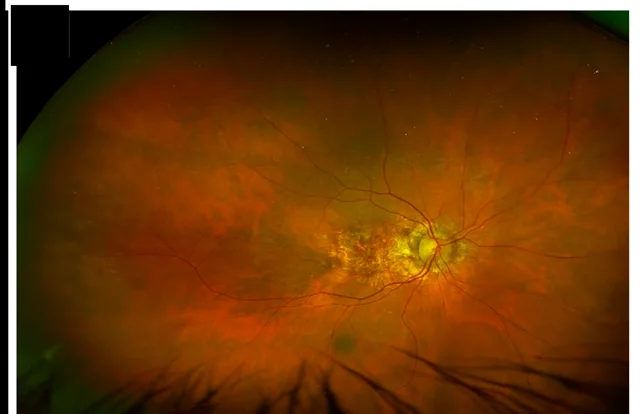

Glaucoma is damage to the optic nerve — the cable that carries what your eye sees back to your brain. It’s usually caused by pressure building up inside the eye over time. That pressure slowly damages the nerve fibers, and once they’re damaged, they don’t come back.
Here’s the part that surprises most patients: glaucoma almost never hurts, and it almost never causes blurry vision, at least not at first. It starts at the outer edges of your vision, in the parts you’re least likely to notice, and creeps inward so gradually that your brain fills in the gaps without telling you. That’s why it’s often called “the silent thief of sight.” Most people with early glaucoma feel completely normal.
Who’s more likely to get it
Glaucoma becomes more common with age, especially after 60. It also runs in families, so if a parent or sibling has it, your risk is higher. African American and Hispanic patients face a higher risk as well, and it can appear earlier in life. None of this means glaucoma is inevitable — it just means testing matters more for some patients than others.
How we actually find it
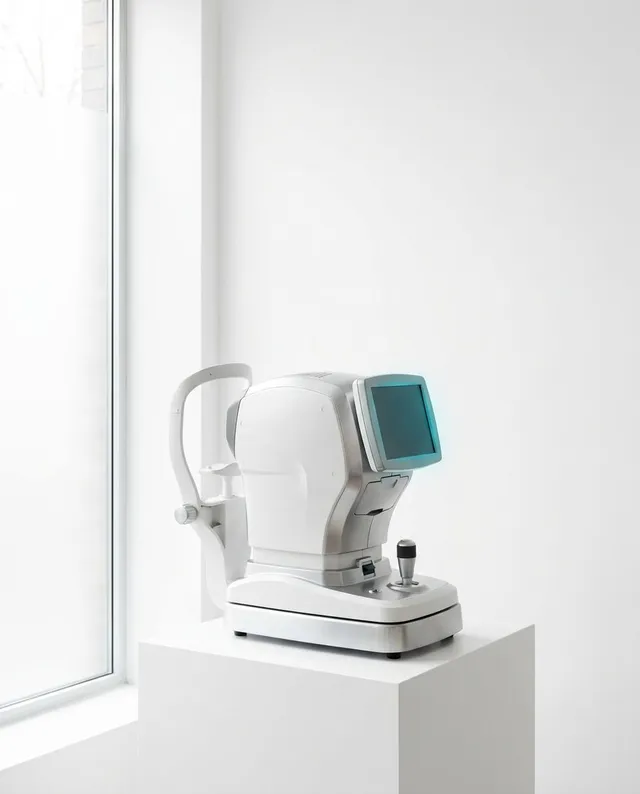
Because there are no symptoms to go on, glaucoma is found through testing, not complaints. A few tools do the real work: we measure the pressure inside your eye, we look closely at the optic nerve itself, and we use OCT imaging to measure the thickness of the nerve fibers — often catching subtle changes years before they’d affect your vision. A visual field test can also map out your side vision to check for the earliest gaps.
None of this is uncomfortable, and none of it takes long. It’s simply part of a comprehensive eye exam.
The good news
Glaucoma can’t be reversed, but it can almost always be controlled once it’s found — usually with daily eye drops, sometimes with other treatment. The goal is simple: catch it early, keep the pressure in a safe range, and protect the vision you have for the rest of your life. Regular exams are what make that possible, since testing is really the only way anyone finds out they have it.