

Sometime around your 40s, something odd happens: menus, phone screens, and small print start drifting further away. Not because your arms are shrinking — because of a normal change happening inside your eyes, called presbyopia.
What’s actually happening
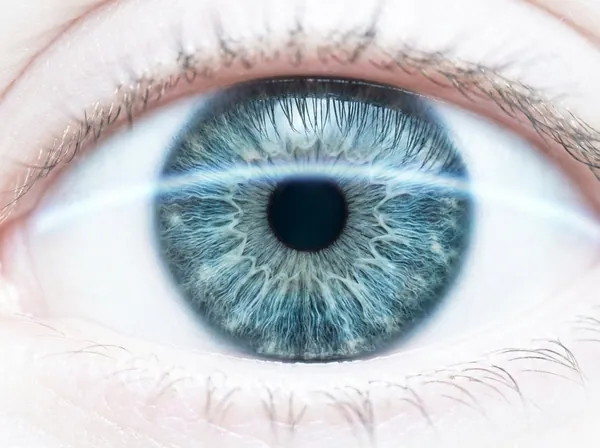
Inside your eye is a small lens that changes shape to help you focus up close. When you’re young, that lens is flexible, like a fresh rubber band. Over the years, it slowly stiffens, the way anything does with age. A stiffer lens can’t flex and refocus for close-up work as easily, so near objects start to blur before far ones do.
This isn’t caused by reading too much, holding your phone wrong, or straining your eyes. It happens to almost everyone eventually, usually becoming noticeable somewhere in the 40s, whether you’ve needed glasses your whole life or never worn them at all.
Your options
The good news is presbyopia is easy to correct, and there’s more than one way to do it.
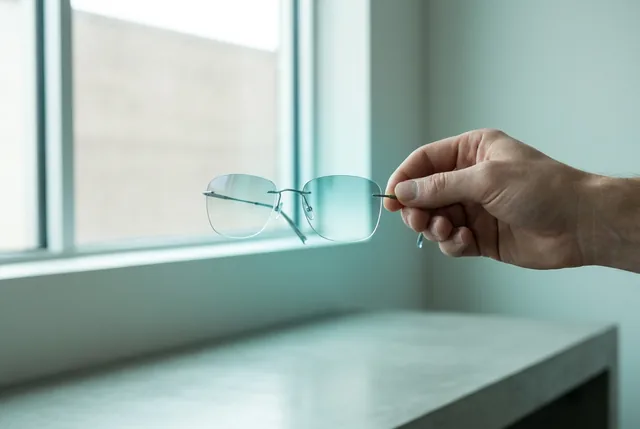
- Reading glasses. Simple, inexpensive, and a fine option if you mainly need help at one distance.
- Bifocals. Two prescriptions in one lens — distance on top, near on the bottom.
- Progressive lenses. A smooth blend of distance, middle, and near vision in one lens, with no visible line.
- Contact lenses, including options built specifically to handle both near and far vision.
Which option fits best really comes down to your daily life — what you do for work, how much screen time you have, and how your eyes are aging alongside the presbyopia. It’s worth talking through in person rather than guessing off the shelf.
A quick note
Presbyopia is a normal, expected change — not a sign anything is wrong. But it’s still worth having your eyes examined when it starts, since this is also an age when other changes can begin quietly in the background. A comprehensive exam covers both at once.